High Studies for Security and Defence (HSSD) auditors visit the Belgian integrated police
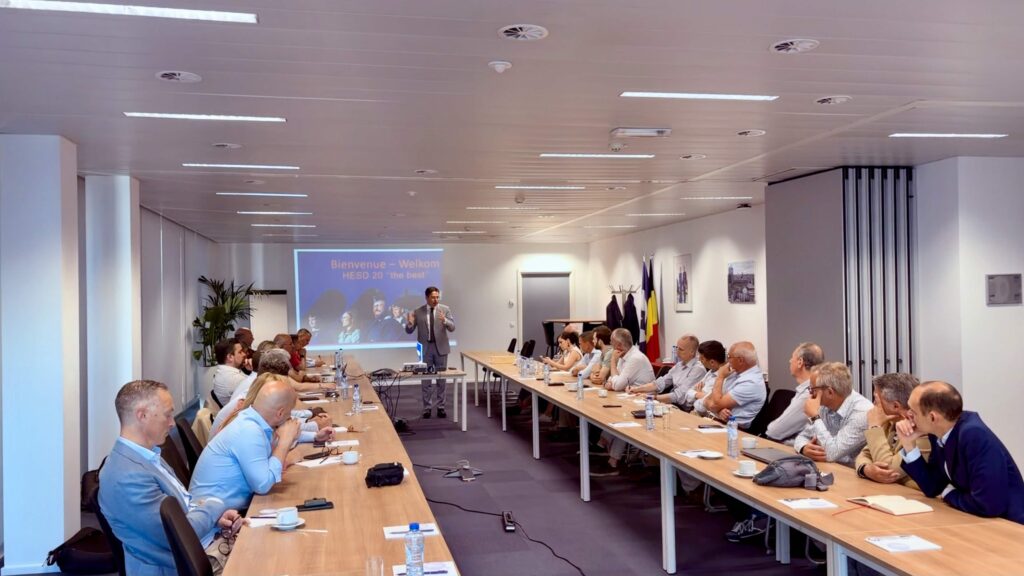
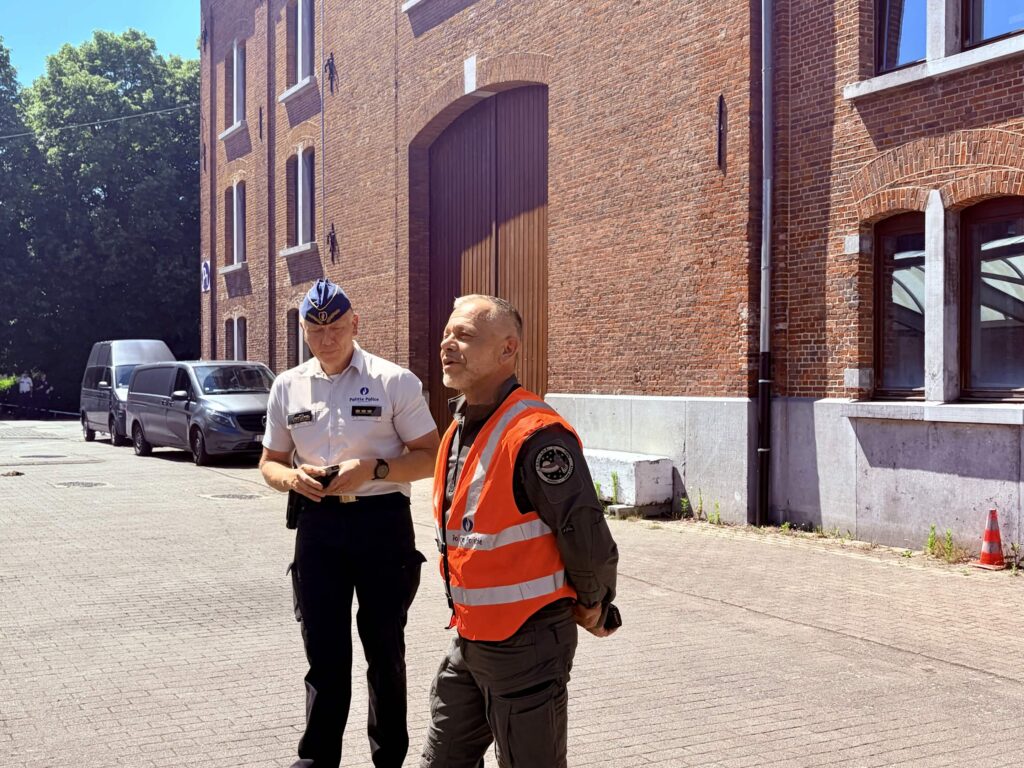
As part of the High Studies for Security and Defence (HSSD) training programme, the auditors visited the Belgian integrated police, gaining direct insight into one of the central pillars of Belgium’s internal security architecture. The visit took place at the State Administrative Centre of the federal police in Brussels.
An Integrated Policing Model at the Heart of Belgium’s Security Architecture
The day opened with a welcome address by Commissioner General Eric Snoeck, head of the federal police, during which he underscored the significance of the visit and set the tone for a programme of substantive exchanges with senior representatives of Belgium’s police services.
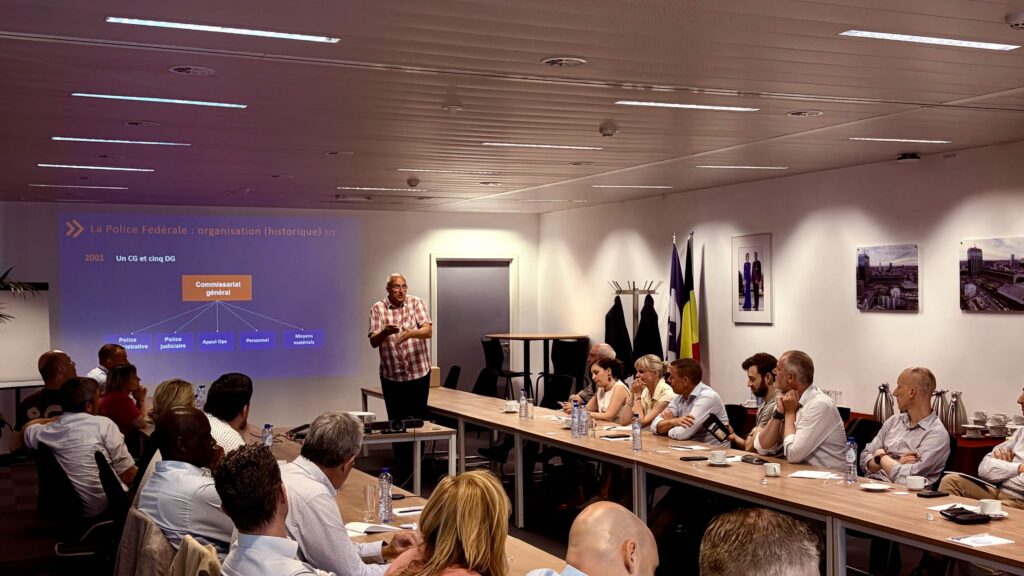
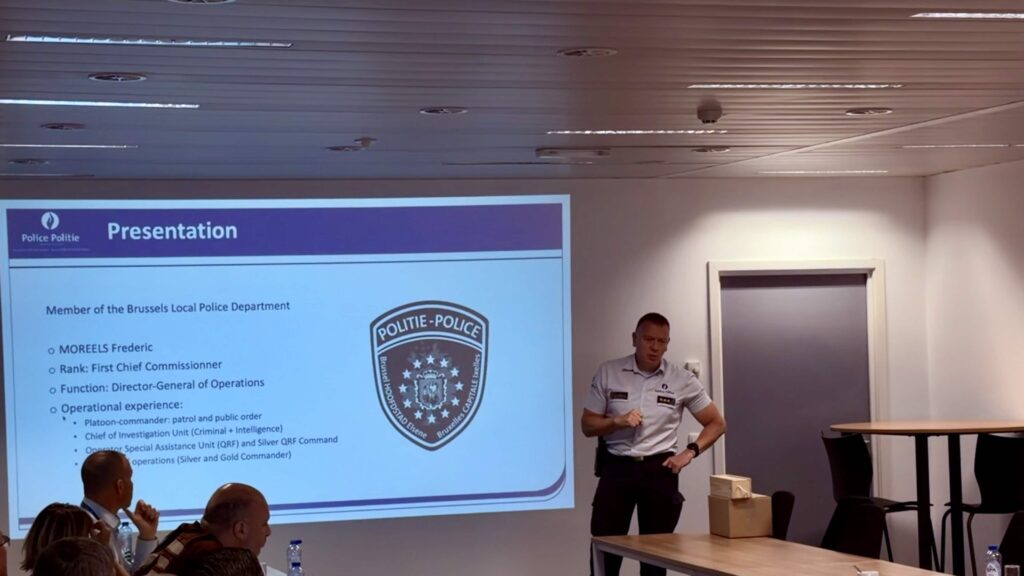
The morning sessions were devoted to presentations covering the organisation and missions of both the federal police and the local police, offering auditors a comprehensive overview of the integrated policing model that governs Belgium’s law enforcement landscape. The complementarity between the federal and local level emerged as a recurring theme, illustrating how coordinated action across jurisdictions and competences underpins effective responses to complex security challenges.
Organised Crime, Encrypted Networks and Digital Investigations
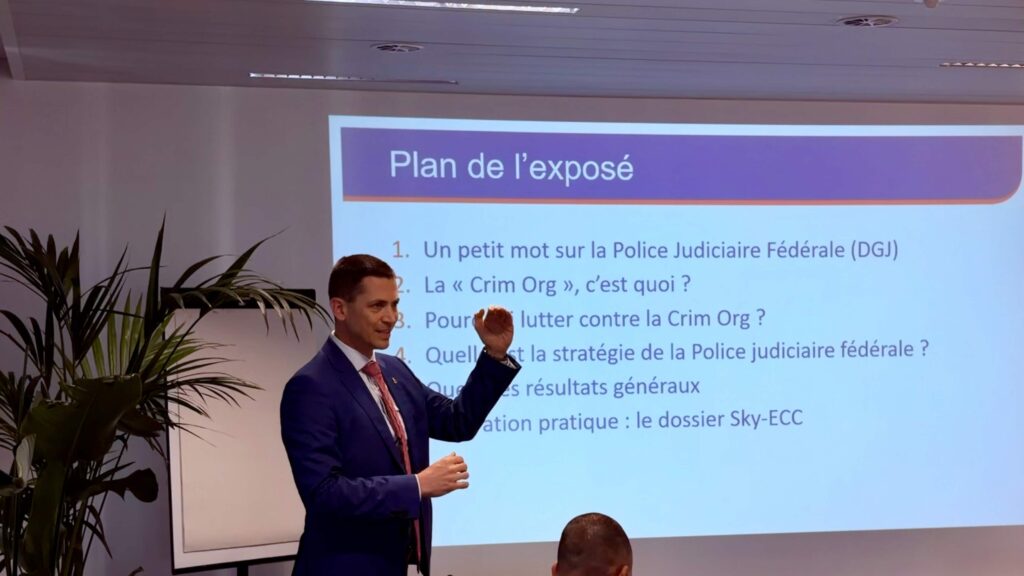
A dedicated session addressed the Sky ECC case, a landmark investigation into an encrypted communications platform that was widely used by organised crime networks across Europe. The presentation provided auditors with concrete insight into the investigative and operational challenges posed by encrypted communications, the role of digital evidence in large-scale criminal proceedings and the importance of cross-border police cooperation.
The Sky ECC case has become a reference point in European law enforcement and its inclusion in the HSSD programme highlighted the growing convergence between internal security, digital investigations and the broader defence and resilience agenda.
A further session examined the federal police’s approach to organised crime more generally, tackling the structural and tactical dimensions of combatting criminal networks that operate across borders and exploit vulnerabilities in legal, financial and digital systems.
From the Briefing Room to the Field: An Operational Perspective
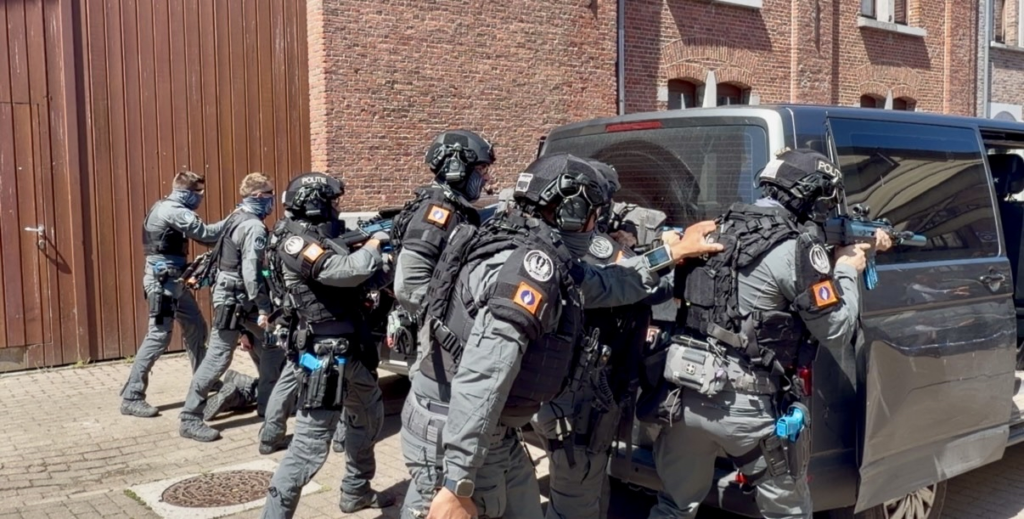
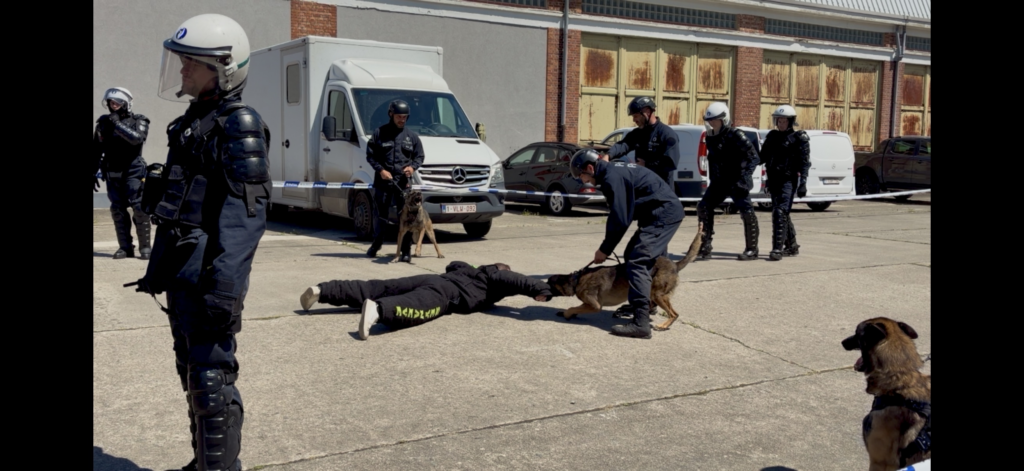
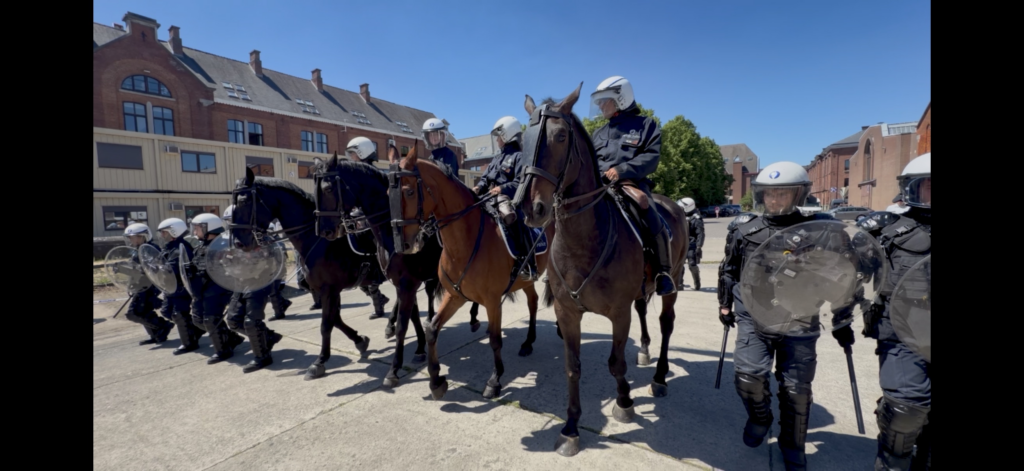
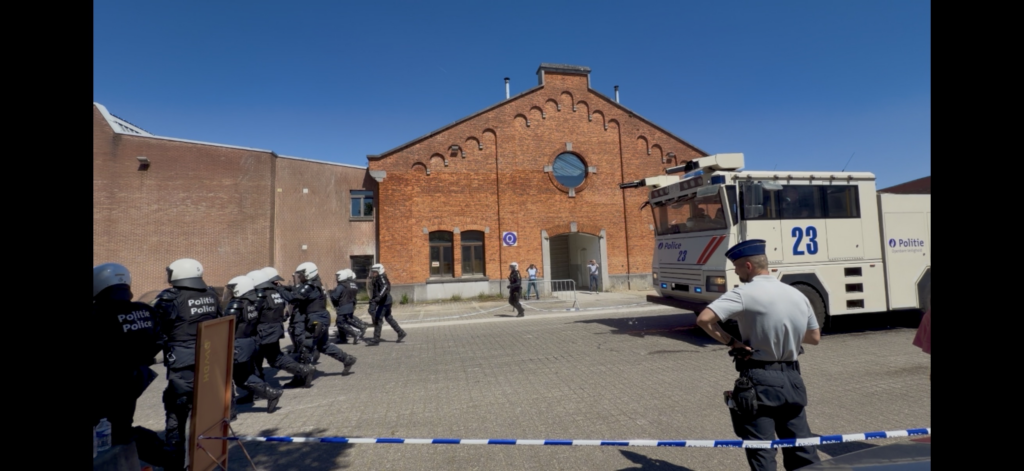
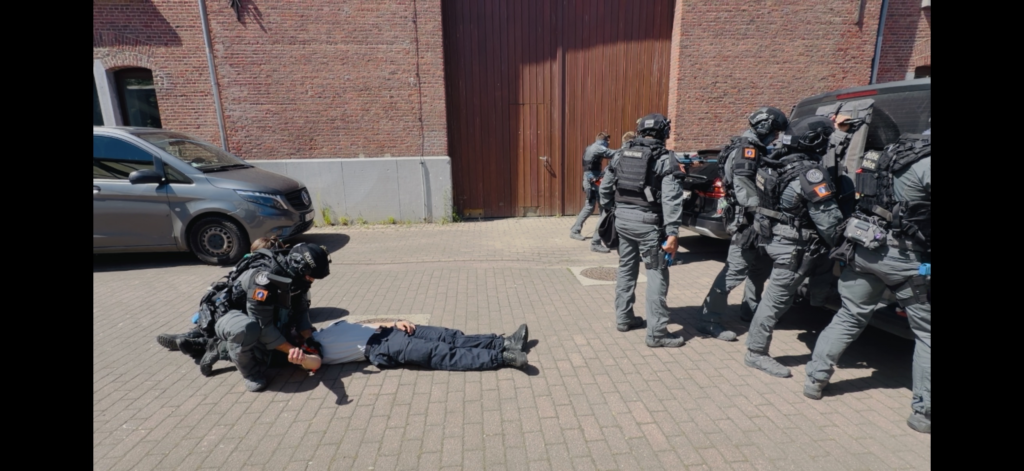
The afternoon session shifted from the institutional to the operational level. Auditors travelled by armoured vehicles to the Major Géruzet barracks in Etterbeek, where they observed a static demonstration of police equipment and operational capabilities. It encompassed a range of assets deployed by law enforcement units, including water cannon vehicles, canine units and quick reaction forces (QRF).
Throughout the visit, the exchanges reinforced a central objective of the HSSD: to deepen auditors’ understanding of the Belgian security and defence ecosystem by fostering direct contact with key institutions and decision-makers. The integrated police occupies a vital position within that ecosystem, at the intersection of public order, criminal investigation, crisis management and interinstitutional cooperation. The visit illustrated how internal security and defence are not separate domains but interconnected fields requiring shared situational awareness, mutual understanding and coordinated action. The Royal Higher Institute for Defence (RHID) extends its appreciation to the integrated police, and in particular to Commissioner General Eric Snoeck and his teams, for the quality and openness of the programme offered to the HSSD auditors. Visits of this nature, which combine high-level institutional briefings with direct operational exposure, constitute an essential component of the HSSD methodology: one that ensures auditors are equipped not only with conceptual frameworks, but also with the concrete understanding of institutions, capabilities and challenges that effective security and defence governance demands.