Regional theme 4: Asia, including Russia
Understanding Asia and Russia: Why this strategic theatre matters for European security
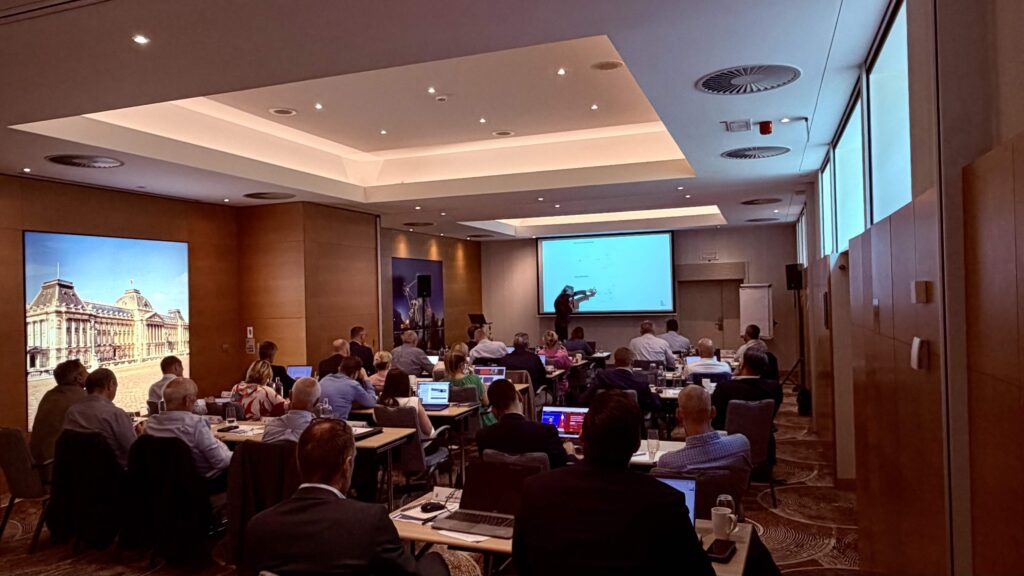
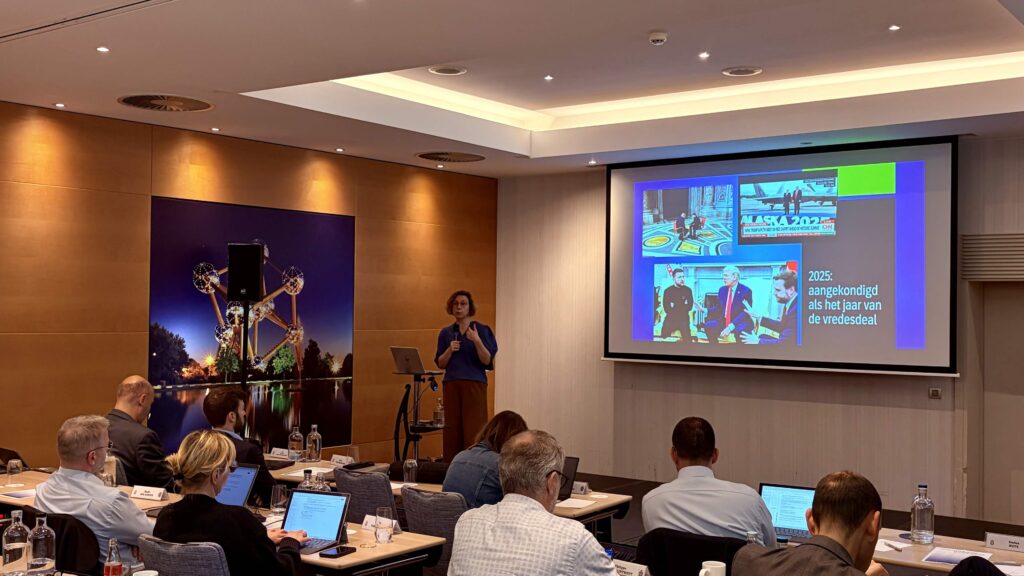
On 22 and 23 May 2026, the Royal Higher Institute for Defence (RHID) hosted the 9th seminar of the High Studies for Security and Defence (HSSD), dedicated to regional theme 4 ‘Asia, including Russia’.
First, during the afternoon of 22 May, the auditors took part in a sport activity. Consistent with the HSSD’s pedagogical approach, this moment reinforced cohesion among auditors – a reminder that the programme is not merely a succession of expert briefings, but the gradual formation of a network of senior decision markers.
The choice of Asia, including Russia, as the fourth regional theme reflects the growing centrality of this vast and heterogeneous space to European and Belgian security. From Russia’s ongoing war against Ukraine and the accelerating military rise of the People’s Republic of China, to India’s increasingly assertive global posture and the emerging strategic contest over the Arctic, the region encapsulates many of the defining tensions of the current strategic environment. These include great: power competition, hybrid warfare, questions of strategic autonomy and the reconfiguration of regional security architectures.
India, China, Russia and the Arctic: six expert perspectives on Asia’s strategic complexity
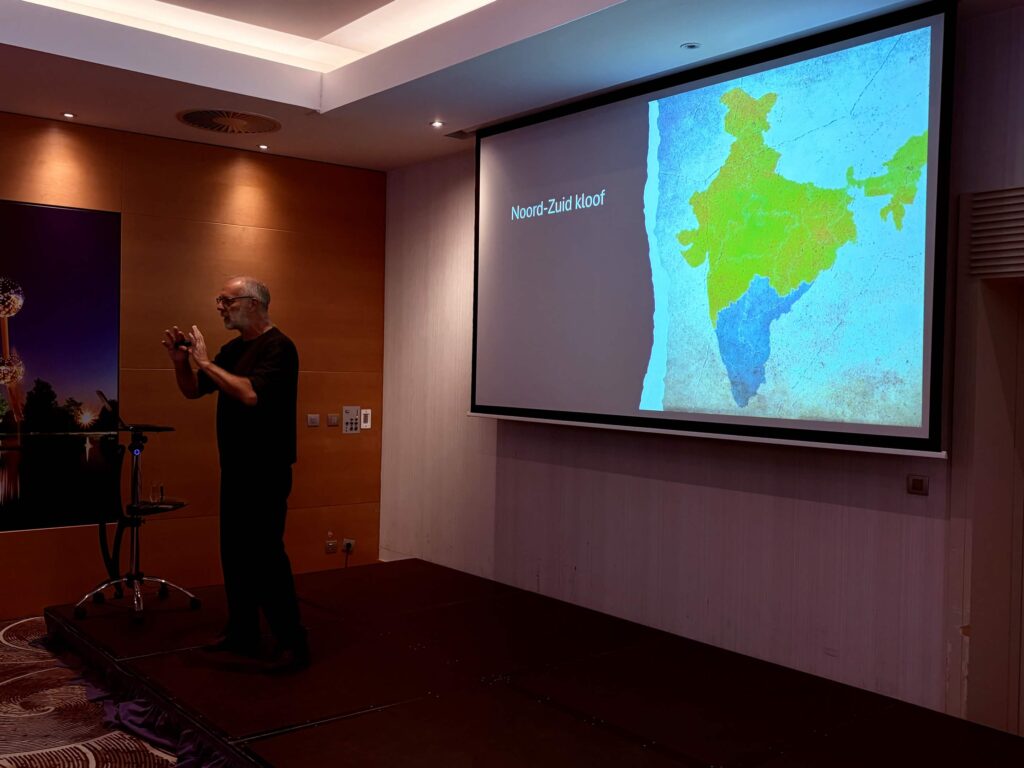
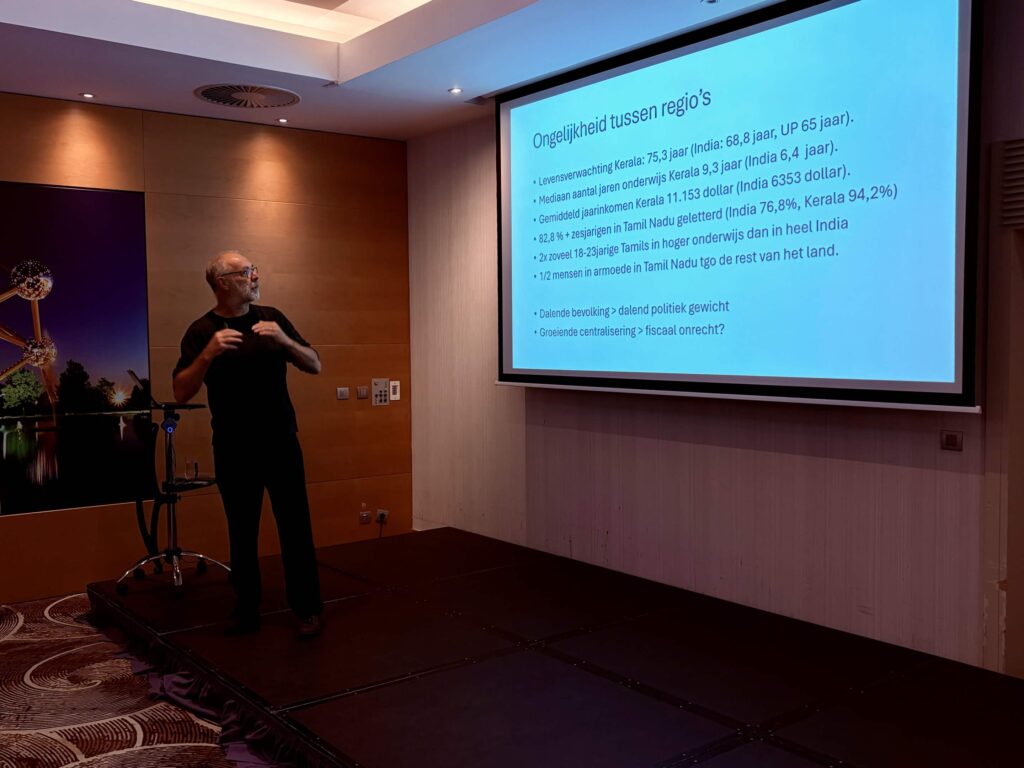
The programme unfolded through six interventions of complementary scope and opened with a presentation by Gie Goris, a journalist with three decades of experiences in global reporting. Former editor in chief of Wereldwijd and of MO*, Goris developed a rare depth of expertise across Asia. He offered auditors a nuanced and empirically grounded assessment of India as a ‘silent giant’ on the global stage. It is indeed a country whose civilisational depth, demographic weight and political assertiveness are frequently misread or underestimated in Western security discourse.
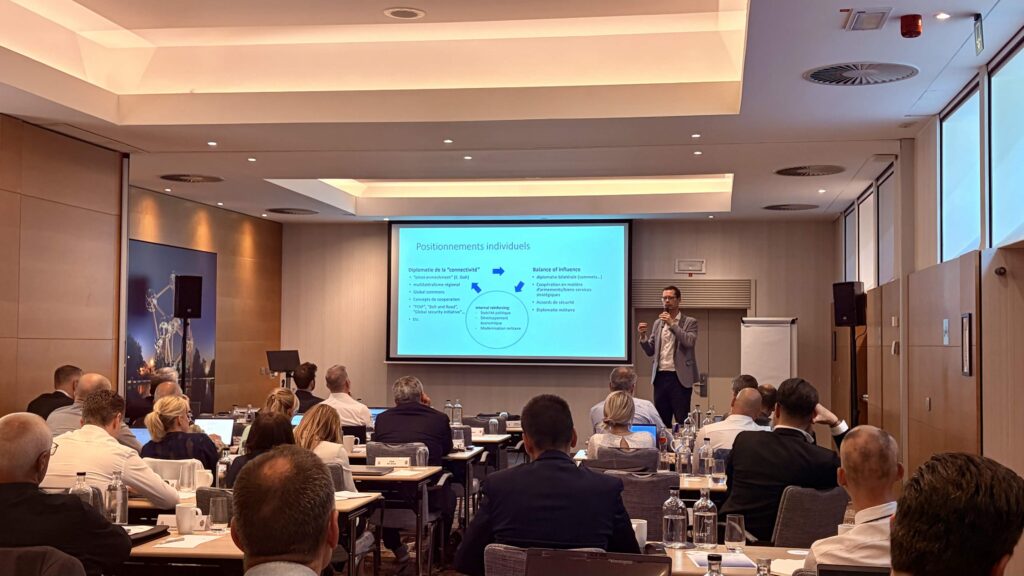
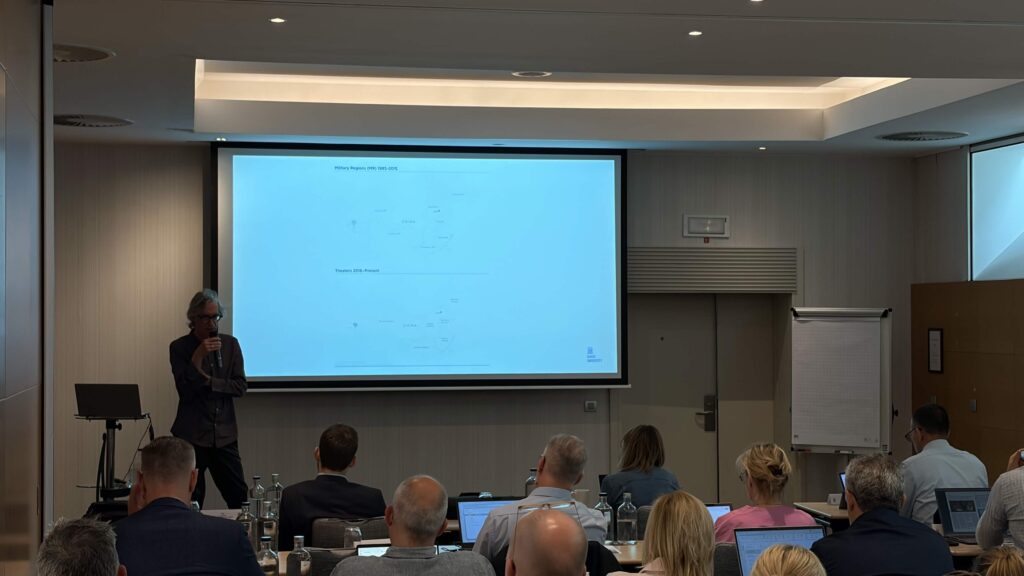
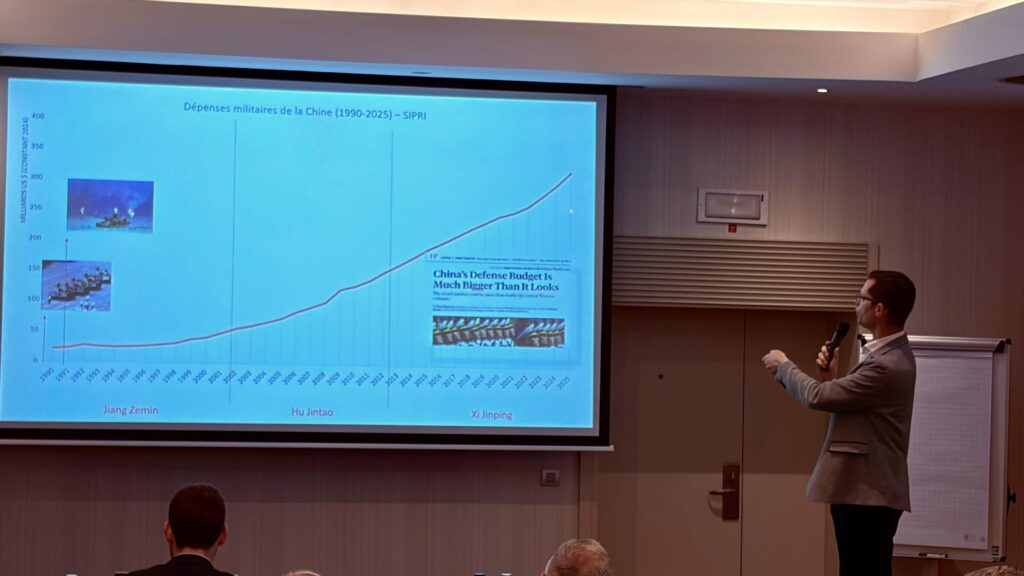
Dr. Bruno Hellendorff, currently at the Belgian Ministry of Foreign Affaires and a former fellow of the Egmont Institute and the European Policy Centre, examined the strategic significance of the Indo-Pacific and the rapid military modernisation of China. His intervention situated China’s rise within the broader reconfiguration of the international order and paid particular attention to maritime security and the shifting balance of power across the Asia-Pacific.
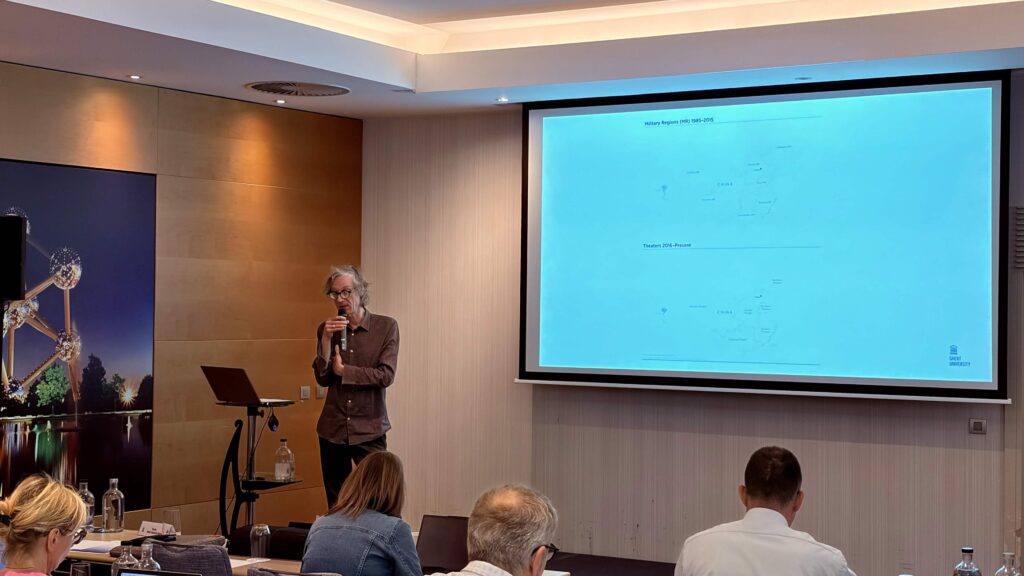
Prof. Dr. Bart Dessein (Ghent University-, President of the European Association for Chinese Studies, offered a deeper cultural and ideological reading of China. His analysis of the Chinese Communist Party’s evolution and its implications for Beijing’s long term strategic ambitions provided the auditors with essential tools for understanding China’s foreign policy beyond immediate geopolitical indicators.
The Russia dimension: two complementary angles
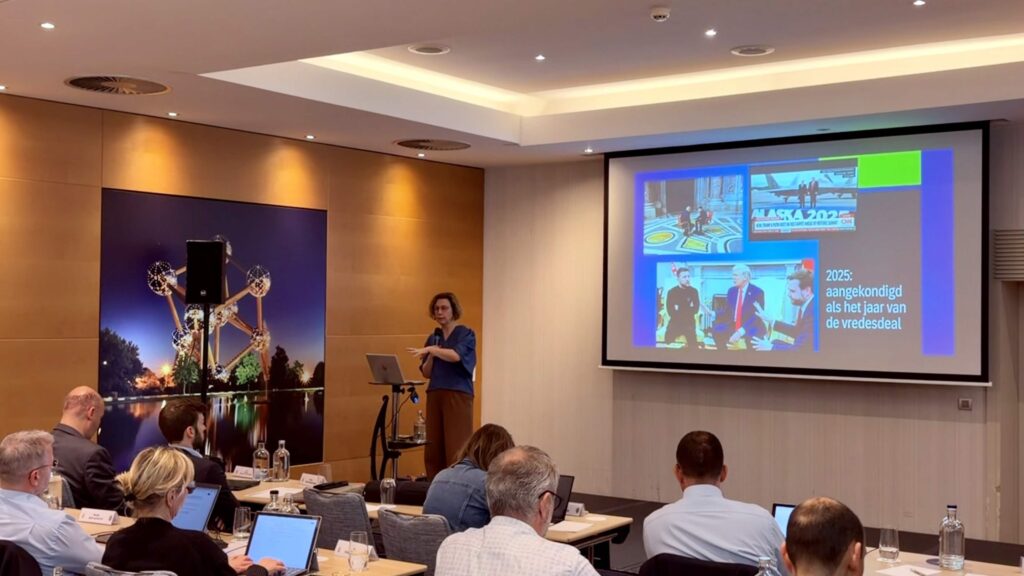
Prof. Dr. Ria Laenen (KU Leuven) is an expert on Russian foreign policy, political developments in Russia and the post-Soviet space, EU-Russia relations, Eurasian geopolitics and frozen conflicts. She examined the motivations and power culture driving Vladimir Putin’s decision to wage war against Ukraine, situating the conflict within Russia’s broader imperial ambitions.
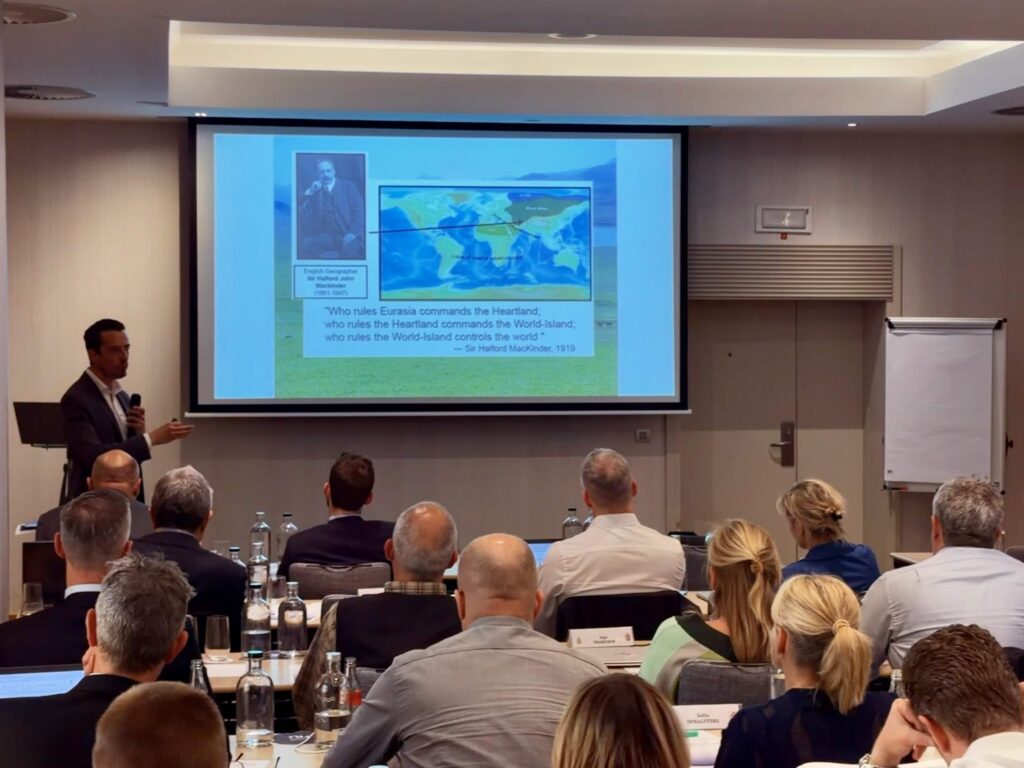
Nicolas Gosset, a former researcher at the RHID’s Centre for Security and Defence Studies (CSDS) who is currently serving as a diplomat at Belgium’s Permanent Representation to NATO, analysed the structural ties and latent tensions within the Russia-China partnership, focusing on the asymmetries and vulnerabilities inherent in the Putin-Xi alignment and their implications fir the international order.
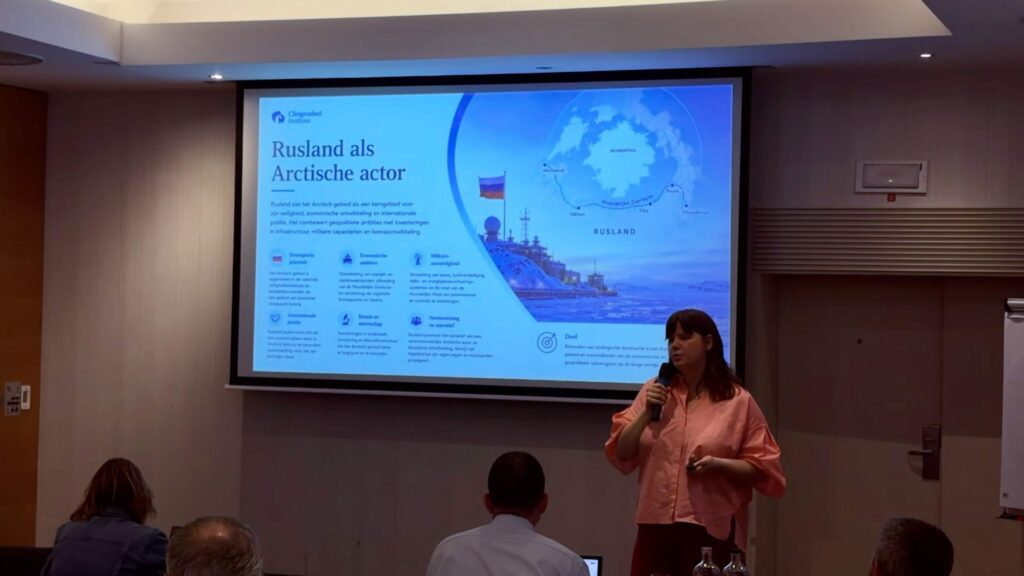
Closing the programme, Karen Van Loon brought the seminar’s geographic scope to its northernmost point. An associate fellow in the European Affairs Programme at the Egmont Institute and a research fellow at Clingendael’s Security and Defence Programme, her research centres on Arctic geopolitics, arms control and nuclear non-proliferation. Her intervention addressed the Arctic as an emerging arena of geopolitical competition, where energy resources, maritime navigation routes, military posturing and arms control imperatives converge, and where multiple state actors are positioning themselves with increasing urgency.
The HSSD preparing decision makers for an era of complexity
These six interventions offered auditors a structured and intellectually rigorous understanding of a region that will shape international security for decades to come. The value of the 9th seminar lay not only in the quality of the individual interventions, but in their collective coherence: six distinct disciplinary and regional perspectives, each illuminating a different facet of the same challenge.
This is precisely the purpose of the HSSD: to connect academic analysis, policy expertise and operational experience within a community of professionals who bear genuine responsibilities in the fields of security and defence. Security challenges of this magnitude cannot be grasped through a single lens. They require the kind of sustained, high-level and multidisciplinary engagement that the HSSD is designed to provide.
Registrations for the 2027-2028 session will open in September 2026.