The US-Israeli attack on Iran on 28 February 2026 sparked a regional conflict with global repercussions. Soon after the outbreak of hostilities, violent protests erupted in multiple cities in Pakistan, resulting in clashes with security forces and the death of several demonstrators. The impact could be even more intense if the war in the Middle East protracts over time, as Pakistan’s fragile socio-economic situation makes it one of the most vulnerable countries. The increase of oil prices as a result of the war will raise inflation and worsen the economic conditions of Pakistani households, thus fuelling discontent. This can in turn foment radicalisation, thereby exacerbating Pakistan’s already serious terrorism problem and further destabilising the country. The presence of a large Shia community, which tends to side with the Iranian regime, makes this risk even more acute. At the international level, the war puts Pakistan in a difficult position. While it has no interests in being dragged into the conflict, the presence of Shias in contested Kashmir and their violent protest following the outbreak of hostilities in Iran also raise the risk of tensions and, possibly, conflict with India. Moreover, Pakistan has a mutual defence pact with Saudi Arabia and Iranian attacks on this country may force it to intervene. While it seems unlikely at the current stage, this maze creates the prospect of an enlargement of the conflict, a scenario that should not be dismissed and that could have a significant regional impact.
Download e-Note 91Research lines: Indo-Pacific ; Non-Arab Muslim World ; Middle East and North Africa
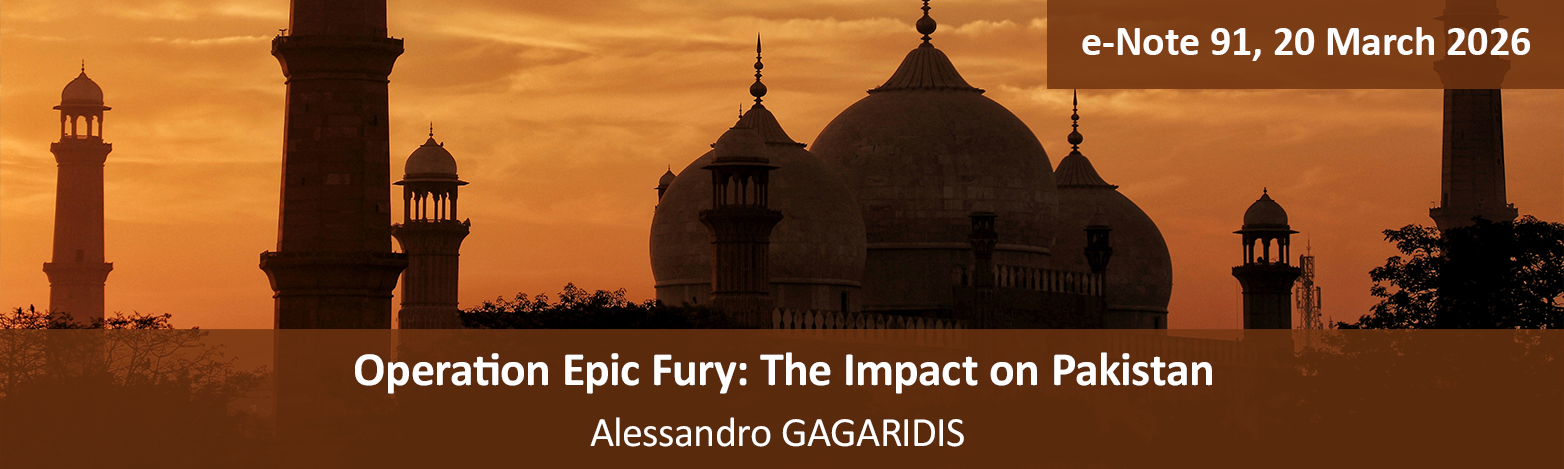
Image source: © Badshahi Mosque in Lahore by Fassifarooq via Wikimedia Commons (CC BY-SA 4.0).