
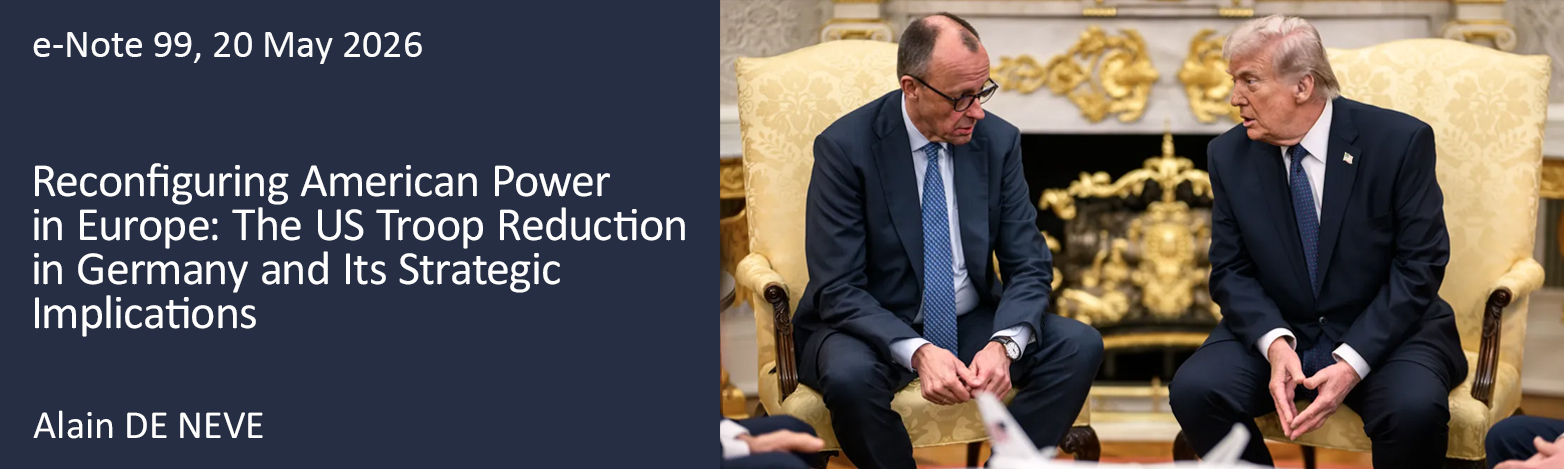
Is the United States quietly redrawing the map of transatlantic security? The announced partial withdrawal of US troops from Germany and the cancellation of key long-range strike deployments have reignited familiar anxieties across Europe. Yet rather than signalling a rupture, these decisions may reveal something more consequential: the steady materialisation of a long-anticipated strategic shift. This e-Note argues that Washington’s posture adjustment reflects not erratic disengagement, but a structural rebalancing driven by global priorities and enduring commitments elsewhere in the world. However, this recalibration is not without cost. By creating both capability and perception gaps, it reshapes the architecture of conventional deterrence in Europe while subtly testing the political cohesion and strategic elasticity of NATO. But beyond the continent, the implications reverberate further. US allies in the Indo-Pacific may interpret these moves as signals about the conditional nature of American guarantees, raising questions that extend well beyond Europe itself. At its core, this analysis challenges a persistent European misreading: the tendency to treat each adjustment as a shock rather than the continuation of a visible trajectory. The real issue, therefore, is not whether the United States is changing course but whether Europe is finally prepared to adapt to that reality.
Download e-Note 99Research lines: Transatlantic relations
Image source: U.S. Government (The White House)

e-Note 99
Reconfiguring American Power in Europe: The US Troop Reduction in Germany and Its Strategic Implications