Priorities of world powers and their implications for European security
On 16 and 17 October 2026, the Royal Higher Institute for Defence (RHID) hosted the second seminar of the High Studies for Security and Defence (HSSD), dedicated to ‘grand strategy’. For two days, auditors examined how major international actors pursue their long-term interests and how their decisions influence the international balance of power. The programme combined lectures by academics and defence experts with interactive debates and group discussions.
Grand strategy concerns the coordination of a state’s political, economic, diplomatic and military instruments in pursuit of its long-term objectives. Understanding this concept is particularly relevant at a time when relations between major powers are evolving, established partnerships are facing new pressures and European countries are reassessing their defence priorities.
Russia, the United States (US), China and Brazil: different approaches to power
The programme brought together several perspectives on the ambitions and priorities of major international actors.
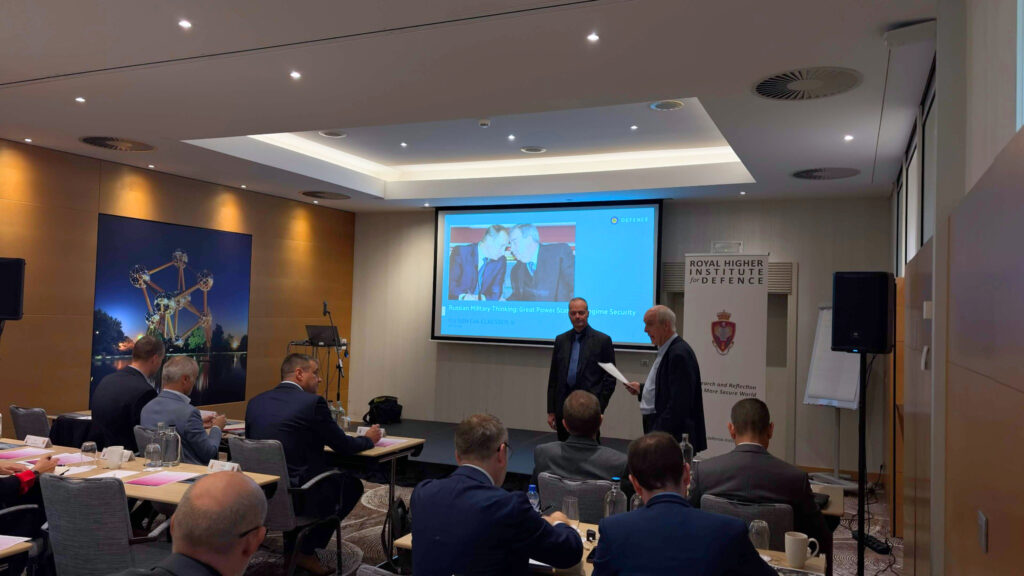
Colonel Erik Claessen examined the evolution of Russian military thinking since the collapse of the Soviet Union. His presentation highlighted the country’s pursuit of great-power status and the preservation of political stability as recurring concerns in Moscow’s approach to international affairs. From NATO enlargement and the conflicts of the 1990s to the ongoing war in Ukraine, the lecture placed contemporary Russian military doctrine within its historical and political context.
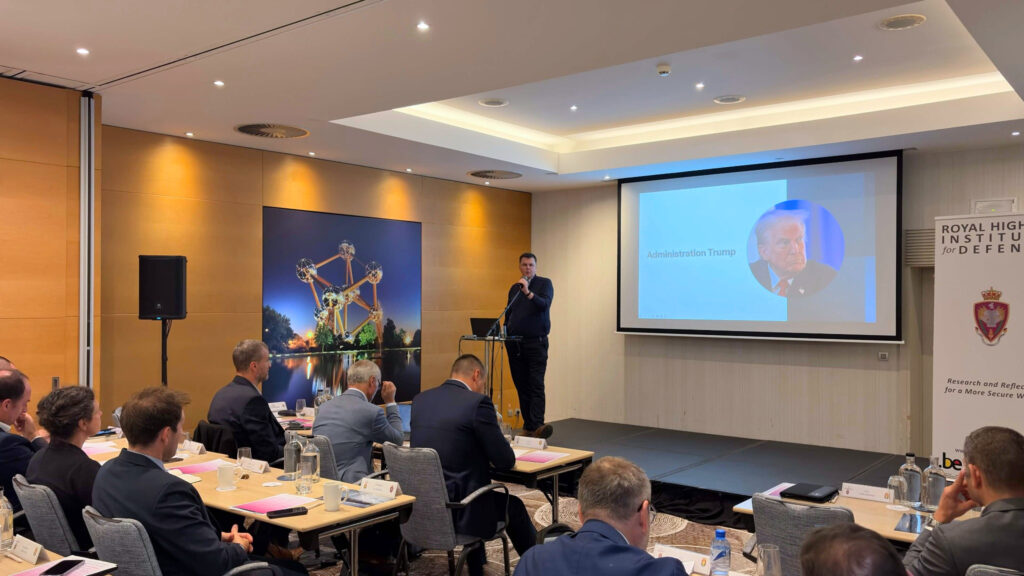
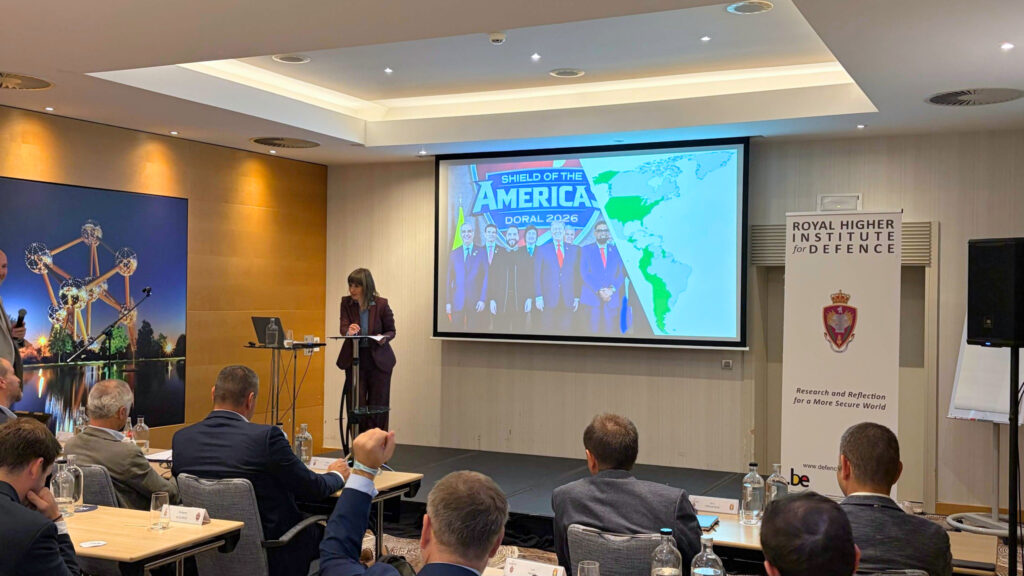
Prof. Dr Tanguy Struye de Swielande (UCLouvain) focused on American grand strategy and the evolution of US foreign policy. His intervention addressed the priorities of the current American administration and tackled the renewed focus on the Western Hemisphere, competition with China and changing expectations towards European allies. The influence of political leadership, economic interests and technological developments on foreign policy decisions was examined, raising questions about the direction and predictability of American engagement abroad.
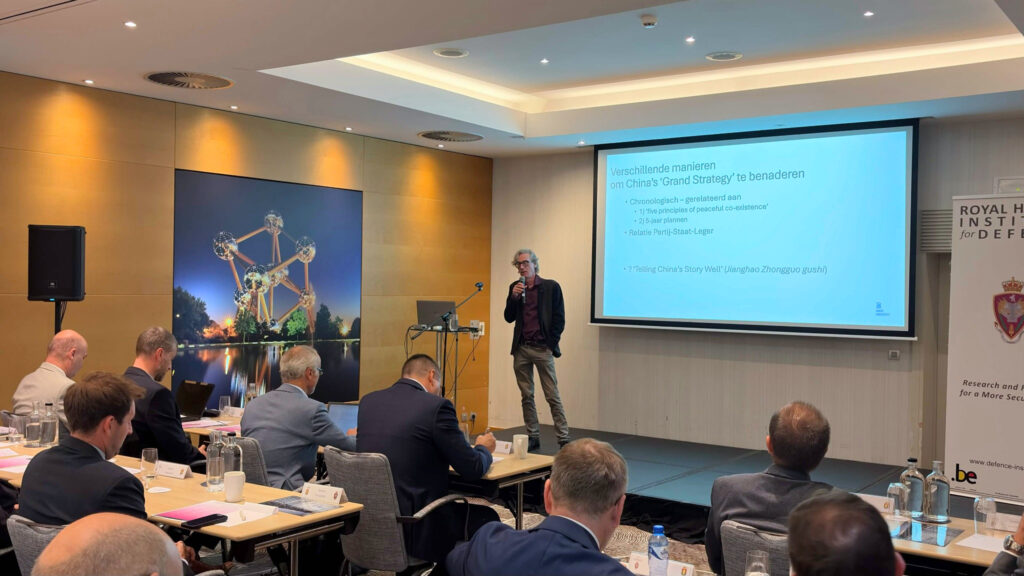
Prof. Dr Bart Dessein (Ghent University), a specialist in the field of Chinese political thinking and history, examined the historical and ideological foundations of China’s international ambitions. His presentation explored how the evolution of the Chinese Communist Party, the country’s perception of itself as a civilisation and the historical memory of foreign interference continue to influence Beijing’s approach to international relations.
Annelies Beck, a journalist at VRT, turned her gaze towards Brazil and examined the country’s historical development, domestic challenges and international ambitions. Brazil’s preference for diversified diplomatic relations rather than exclusive alignment with one specific major power illustrates how countries seek to preserve their autonomy in an increasingly competitive international environment.
Taken together, the four interventions offered auditors different approaches to understanding how national interests, domestic politics and historical events influence the behaviour of states.
Translating political ambitions into defence policy
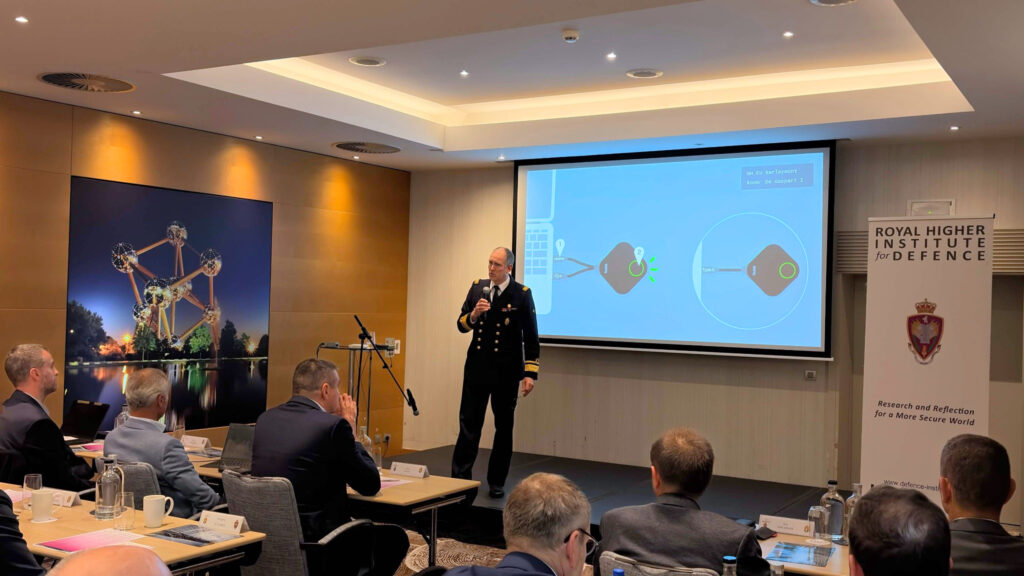
Lieutenant-General aviator Geert De Decker, Belgian Military Representative (MILREP) to NATO’s Military Committee, presented the Alliance’s Strategic Concept and the relationship between political decision-making, military planning and operational readiness. His intervention covered the mechanisms NATO uses to prepare for collective defence, as well as the responsibilities of individual Allies in maintaining the capabilities required to meet common objectives.
Particular attention was paid to resilience and the challenges posed by hybrid threats. Cyber attacks, sabotage and disruptions to critical infrastructure demonstrate the growing importance of civil preparedness alongside conventional military capabilities. In this context, Article 3 of the North Atlantic Treaty, under which Allies commit to maintaining and developing their individual and collective capacity to resist armed attacks, formed an important element of the discussion.
From expert analysis to interactive debate
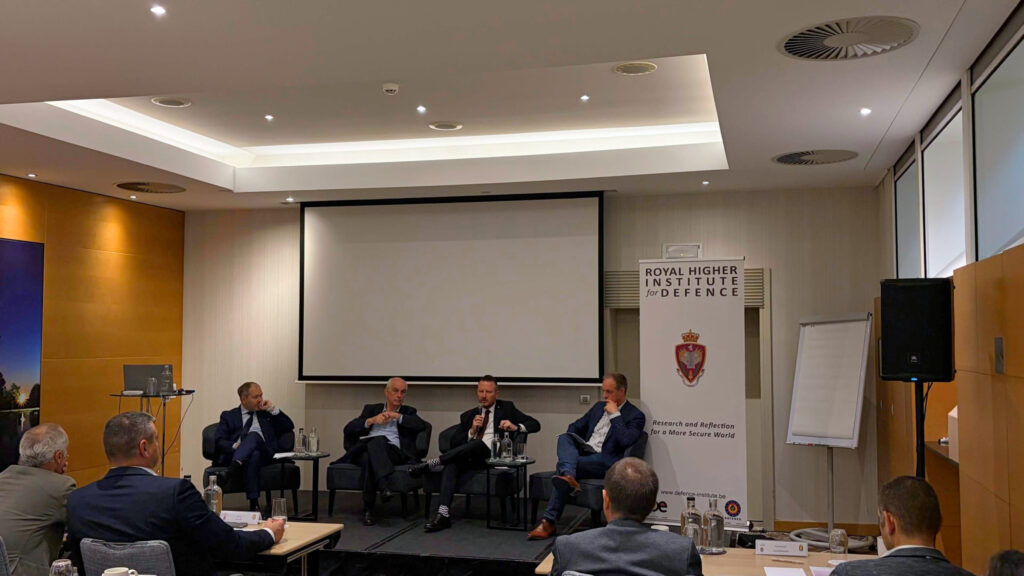
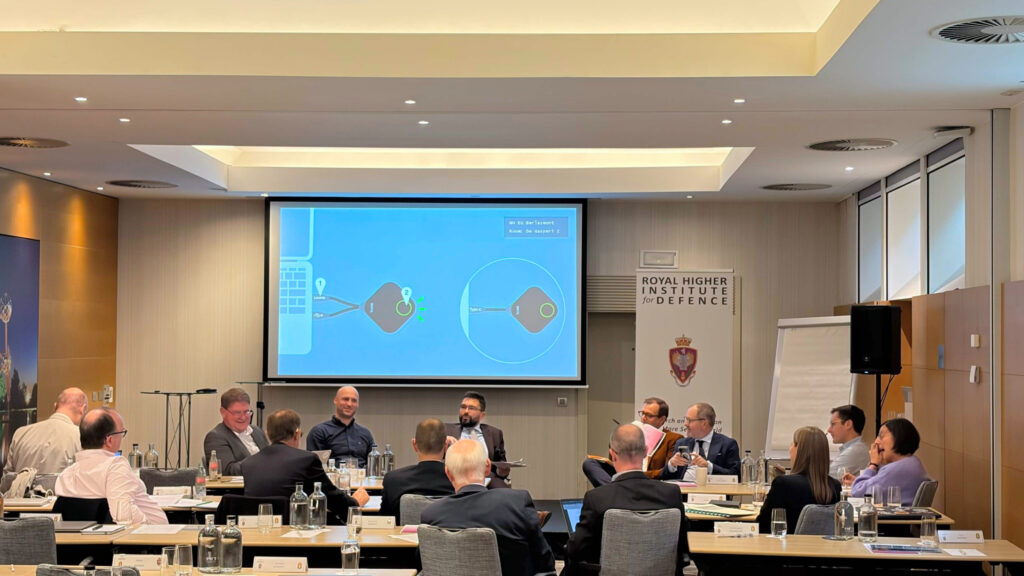
An interactive debate on Belgian defence policy encouraged exchanges on the country’s defence priorities and its responsibilities within the wider European and transatlantic security framework.
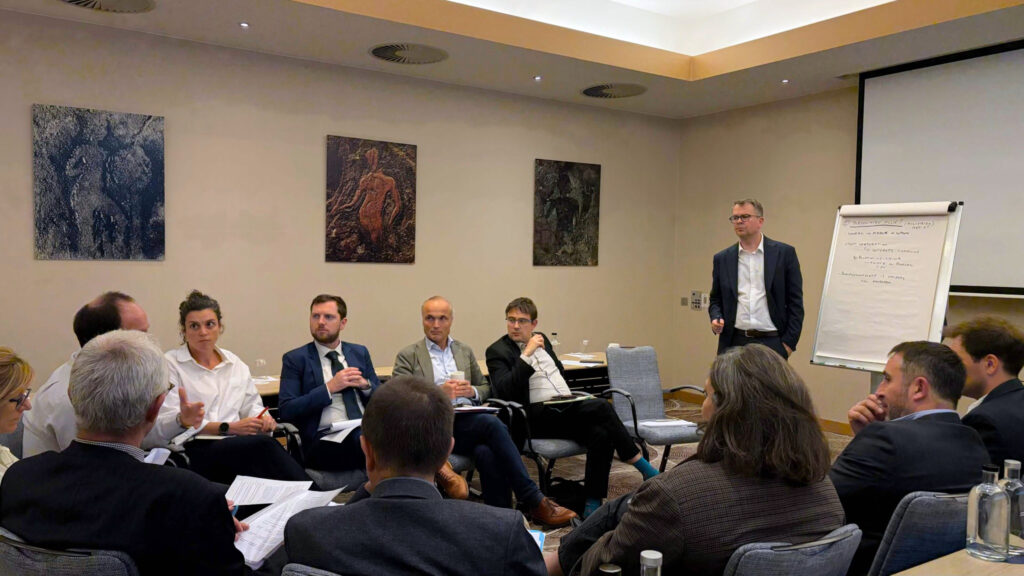
During the group discussions, auditors examined the evolving relationship between the European Union (EU) and the US. The exercise encouraged auditors to consider the different dimensions of transatlantic cooperation, including defence, economic relations and political priorities, while reflecting on how Europe can pursue its own interests within this partnership.
The exchanges reflected the diversity of professional backgrounds represented within the HSSD. Some auditors emphasised both the importance of American defence-industrial cooperation and the military capabilities on which European security continues to depend. Others highlighted the wider political and economic dimensions of the relationship and questioned whether traditional assumptions about transatlantic cooperation remain adequate.
These discussions raised a central question for Europe: how can the EU preserve its cooperation with the US while developing the capacity to defend its own interests, should priorities diverge?
Combining expertise, experience and dialogue
The seminar also included presentations of the RHID and the Egmont Institute by their respective Directors-General, Rear Admiral Baudouin Coppieters de Gibson and Ambassador Bart Ouvry. Moreover, several auditors contributed presentations of their own, while the programme provided further opportunities for professional exchanges.
From the ambitions of Russia, the US, China and Brazil to the challenges facing NATO, the EU and Belgium, the seminar encouraged auditors to examine the interests behind international decisions and their consequences for European security.
This multidisciplinary approach remains at the heart of the HSSD, combining academic knowledge, policy expertise and practical experience to equip auditors with a broader understanding of contemporary security and defence challenges.
With this first seminar, the 2026-2027 HSSD session is now underway. The foundations are set for a year of high-level reflection, discovery and engagement.
📢 Applications for the 2027-2028 session are already open. Interested in joining the next High Studies for Security and Defence? Apply today and become part of this unique network at the crossroads of strategy, diplomacy and defence. Online registration