
The failure of the 2026 Review Conference of the Treaty on the Non-Proliferation of Nuclear Weapons (NPT) to adopt a consensus outcome document should not be understood as an isolated diplomatic setback. It reflects deeper structural pressures affecting the contemporary nuclear order.
This Focus Paper examines the principal factors that made an agreement increasingly difficult: the modernisation and, in some cases, expansion of the arsenals of the five recognised nuclear-weapon states; the erosion of the post-Cold War arms-control architecture; the return of nuclear coercion in the context of Russia’s war against Ukraine; the weakening credibility of security assurances; the Iranian nuclear crisis; and the declining capacity of the United States to exercise uncontested leadership within the NPT regime.
It argues that these developments have widened the credibility gap between the disarmament commitments of nuclear-weapon states under Article VI and their continued investment in the long-term effectiveness of nuclear deterrence. At the same time, the cases of Ukraine, Iran, Libya and North Korea have reinforced the perception that nuclear possession may offer more durable security than renunciation or diplomatic guarantees.
Yet the Focus Paper also contends that the failure of the Review Conference should not be equated with the failure of the Treaty itself. Despite mounting political tensions, the NPT remains indispensable as the legal and institutional foundation of global non-proliferation, safeguards and peaceful nuclear cooperation. The central challenge is therefore to preserve the Treaty’s legitimacy through transparency, risk reduction, credible security commitments and sustained diplomatic engagement.
Download the Focus Paper 67Research lines: Security and defence architecture; Transatlantic relations; Defence capabilities and technologies
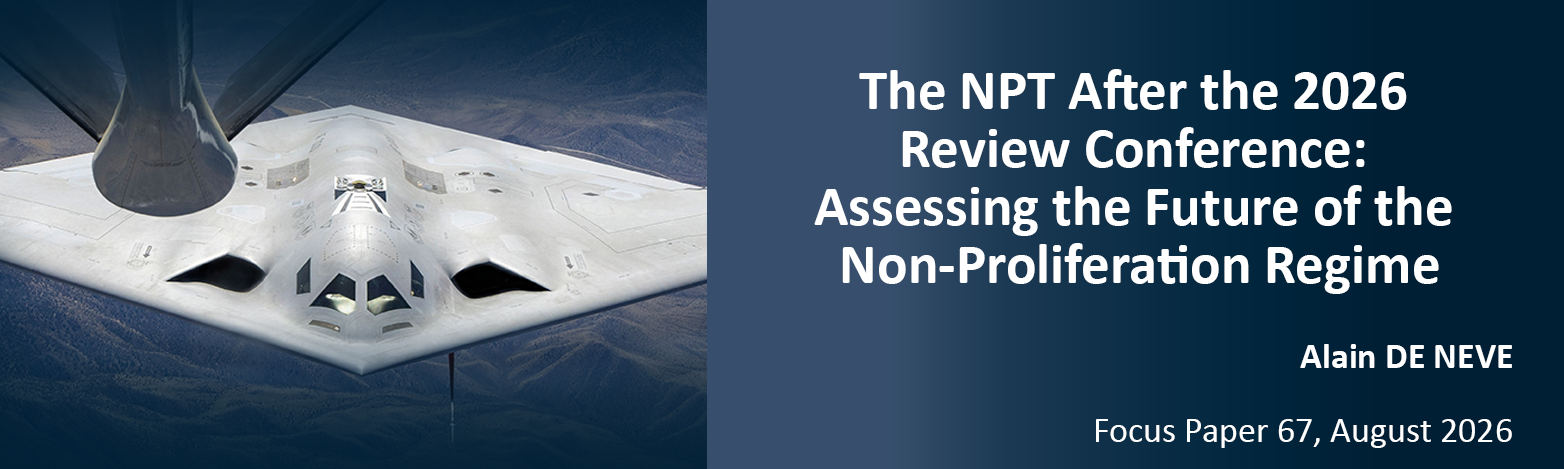
Source image : © U.S. Air Force photo by Todd Schannuth (B-21 image altered for security)

Focus Paper 67
The NPT After the 2026 Review Conference: Assessing the Future of the Non-Proliferation Regime