
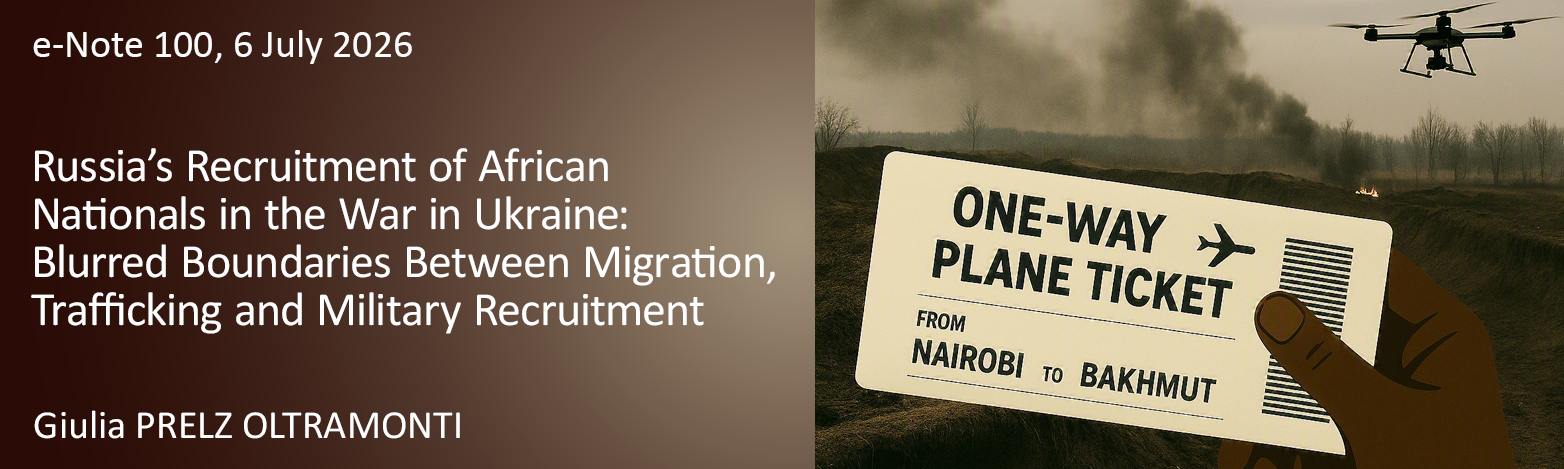
This e-Note analyses Russia’s recruitment of African nationals for the war in Ukraine, focusing on how the boundaries between labour migration, trafficking and military enlistment have become increasingly blurred. As Russia faces mounting personnel shortages and growing demand in its defence sector, it has expanded recruitment beyond its borders, drawing on a diverse pool of foreign nationals, including a rising number from African countries.
Recruitment often operates through deception and coercion. Many individuals are initially attracted by offers of civilian employment, education or migration opportunities, only to be redirected into military service or defence-related work under restrictive conditions. Financial incentives, threats and legal constraints limit the possibility of refusal or exit, raising concerns about practices consistent with human trafficking.
A decentralised network of intermediaries is coupled with legal and financial incentives, provided by the Russian state, that facilitate enlistment. African governments have responded with investigations and public warnings, but their actions remain uneven due to diplomatic sensitivities and enforcement challenges.
The e-Note situates these dynamics within a wider shift in how warfare mobilises transnational labour and exploits digital recruitment channels.
Download e-Note 100Research lines: Eurasia; Sahel and Sub-Saharan Africa
Image source: Created by AI

e-Note 100
Russia’s Recruitment of African Nationals in the War in Ukraine: Blurred Boundaries Between Migration, Trafficking and Military Recruitment