
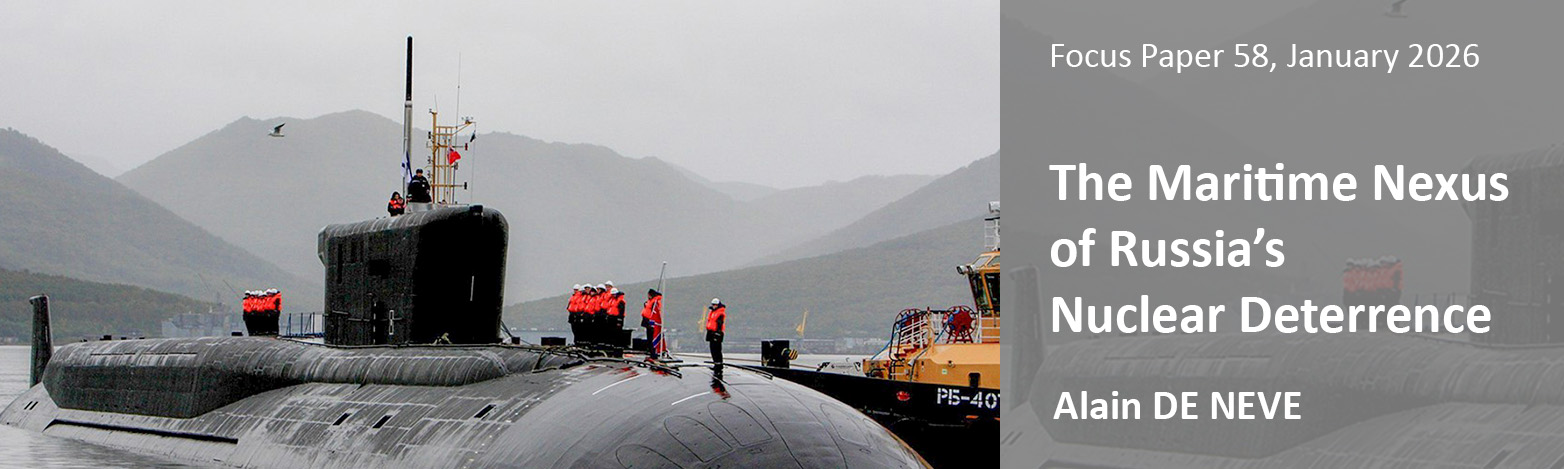
Russia’s most decisive nuclear assets are not the ones showcased in parades, but the ones that remain out of sight. This Focus Paper brings back into view a set of realities that are either little-known or routinely ignored: the centrality of Russia’s underwater deterrent and the strategic logic that sustains it. By examining the Delta IV and Borei/Borei-A submarine fleets and the troubled development of the Bulava submarine-launched ballistic missile (SLBM), the study shows how post-Soviet industrial fragmentation — particularly the loss of Ukraine’s missile industry — still shapes the strengths and limitations of Russia’s sea-based nuclear forces.
The Focus Paper also revisits Poseidon, a programme often discussed more in myth than in substance. Presented by Moscow as a revolutionary answer to US missile defence, this nuclear-powered autonomous unmanned underwater system raises profound questions about command and control, escalation dynamics and the drift towards catastrophic-effect weapons.
Reframed within Russia’s revised 2024 nuclear doctrine and long-term maritime ambitions, these overlooked dynamics reveal how the undersea leg of the triad has quietly become one of the most consequential drivers of European and transatlantic security.
The study concludes by underscoring why Belgium, the EU and NATO must bring these submerged realities back into their strategic field of vision. Maritime surveillance, seabed infrastructure protection and reading Russia’s nuclear signalling at sea are no longer optional technicalities but essential competencies for Euro-Atlantic stability.
Research lines: Defence capabilities and technologies; Eurasia
Source: Ministry of Defence of the Russian Federation (Ildus Gilyazutdinov) – File: «Александр Невский» в Вилючинске.jpg – Wikimedia Commons