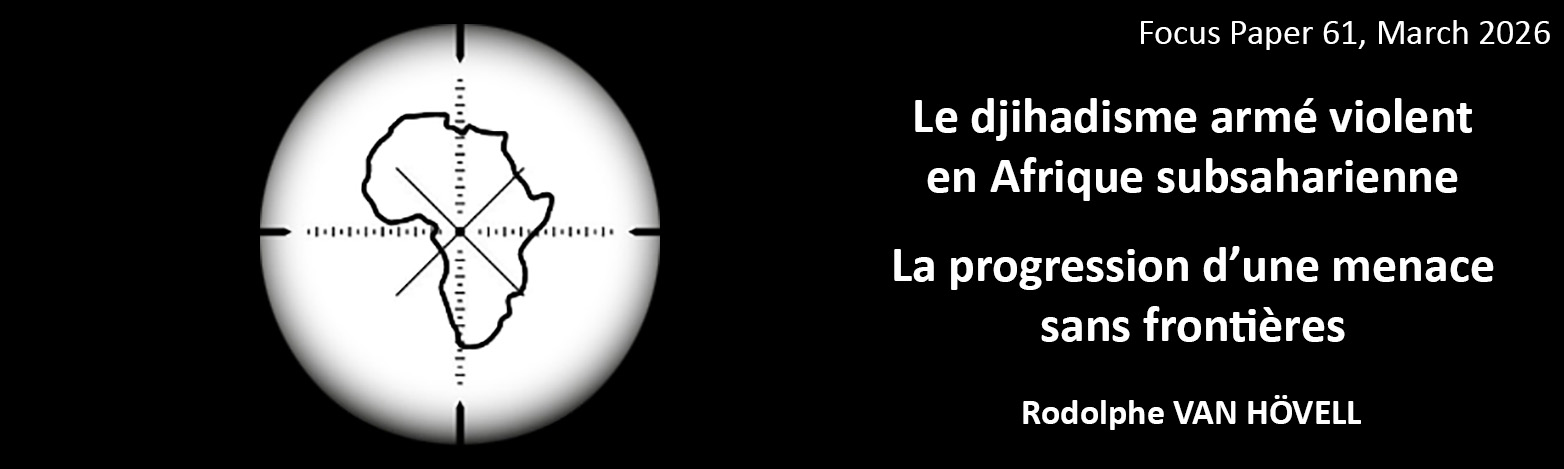
Although they find themselves in a military weakened position in the Near East and North Africa, Islamic State (IS) and Al-Qaeda are rapidly expanding in the Sahel and sub-Saharan Africa. Historically responsible for major attacks, such as 9/11 in the United States and the 2016 attacks in Belgium, these organisations remain a long-term strategic threat for Europe. In 2025, Al-Qaeda appears to have reorganised, notably through the Group for the Support of Islam and Muslims (GSIM) in the Sahel and Al-Shabab in Somalia, while IS continues to take root in the Sahel, the Lake Chad area, Somalia, the Democratic Republic of the Congo (DRC) and Mozambique. Their progress unfolds in a context marked by the collapse of public services, inter-community tensions, porous national borders and collusion with criminal organisations. This study analyses the developments of the main violent jihadist groups that are currently operating in the Sahel and sub-Saharan Africa. It also offers perspectives on how to address these emerging challenges on Europe’s southern flank.
Download the Focus Paper 61(Only available in French)
Research line: Sahel and Sub-Saharan Africa
Source image: Montage RHID
Focus Paper 61
Le djihadisme violent
en Afrique subsaharienne
La progression
d’une menace sans frontières